Choosing a First Pair of Spectator Binoculars
Choose spectator binoculars that suit your seat, viewing habits, and bag so you can spot distant play without struggling to carry or handle them.
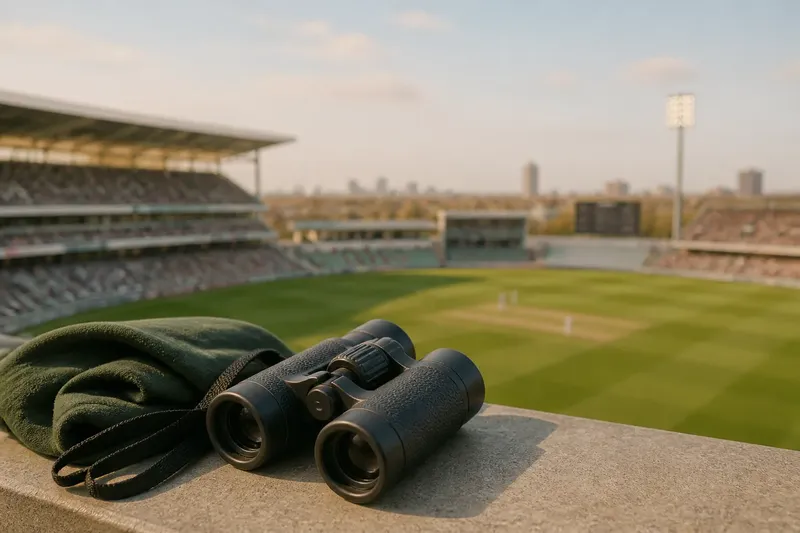
Choosing spectator binoculars starts with your seat: a high row across a cricket ground calls for a different balance of reach and comfort than a close spot beside a football pitch. Think about how often you will lift them, how quickly you need to find moving play, and where they will go when the crowd rises.
Let the seat and sightline guide your choice
From a low stand near a boundary rope or touchline, you may already follow most of the action unaided. Binoculars can still help you inspect a fielder’s position, a goalkeeper’s movement, or a distant gesture from an official, but brief glances may be all you need.
A high seat across the ground puts more distance between you and the players. The binoculars can bring a far section of play closer, yet they cannot fix a blocked view or make it easy to watch the whole field at once. A side-on view often makes movement across the pitch easier to follow than a seat behind a goal or wicket, where action travels toward and away from you.
Consider the moments you want to inspect. A cricket spectator might use binoculars during a pause to look at field placements; a football spectator might raise them for a distant restart, then return to the broad view as play moves. That rhythm favors binoculars you can raise, focus, and lower without losing track of the match.
Compact binoculars suit short, occasional looks
A compact pair is easier to tuck into a coat pocket or small bag on the walk to the ground. That matters if you take public transit, move through a crowded concourse, or already carry a scarf and other match-day items.
The smaller body can be harder to grip steadily, and a tight view may make a moving player or ball trickier to find. Compact models make most sense when you watch the field unaided for much of the match and use magnification for selected details rather than long stretches.
Check how the pair feels in your hands, not just how it looks in a shop display. Try lifting it to your eyes, finding a stationary object, and then following movement across your view. If you fumble for the image or struggle to steady it, the small size may not be an advantage for you.
Larger binoculars can feel steadier during longer viewing
A larger body may be easier to hold securely and can feel more comfortable when you want to inspect distant play for longer. That steadier grip is useful when you are trying to track movement instead of looking at a single still detail.
Bulk is the trade-off. A larger pair can be awkward in a tight row, harder to put away when the crowd stands, and less pleasant to carry along a long walk to the venue. A strap helps keep binoculars close, but it should not swing into a railing or a neighboring spectator when you turn.
Think of the choice like picking a travel mug: the one that feels good in your hand matters more than the one that looks most impressive on a shelf. Try the binoculars while seated, if possible, and see whether you can lift and lower them without crowding the person beside you.
Check field of view, focus, and glasses comfort
Field of view describes how much of the scene you see through the binoculars. A broad view can make it easier to locate a runner or a moving group; a tighter view can be useful when you want to inspect a particular area but may take longer to aim at fast-changing play.
Try the focus control before you buy. It should be easy to adjust without turning a quick look into a fiddly task. Compare the view with and without the binoculars, and ask whether the magnified detail is useful enough to justify the narrower view.
If you wear glasses, try the binoculars with them on. The eyecups and viewing position affect whether you can see comfortably, so choose a pair that lets you take in the image without pressing awkwardly against your face.
Match carrying and storage to the venue
A crowded stand calls for tucked-in elbows, a secure place to stow the binoculars, and a quick way to put them down when everyone jumps up. In an open terrace or a less crowded section, a larger pair may be easier to manage, but your walk to the seat still matters.
- If your bag is small and the binoculars fit inside without forcing the zipper, choose that carry arrangement; if they do not fit, use a smaller pair or a suitable strap.
- If the seat row leaves little room for your elbows, choose a pair you can raise without touching the person beside you; if neither size fits comfortably, rely on the unaided view.
- If the venue’s current bag policy allows your chosen case, bring it; if the policy excludes it, leave the case behind or use an allowed way to protect and carry the binoculars.
- If the neck strap stays close when you turn, it can keep the binoculars handy; if it swings into nearby people or railings, stow the pair between uses.
- If you can focus and lower the binoculars quickly during a pause, they suit occasional checks; if the controls slow you down, consider a simpler pair or use them only when play is stopped.
- If you can locate a moving player promptly through the view, the field of view suits your viewing style; if you keep losing the subject, choose a broader view or follow play unaided.
Venue rules can change, so check the ground’s current bag and equipment policy before setting out. A small case or strap does not override a venue’s restrictions.
Questions to settle before you choose
Are compact binoculars enough for a nearby seat?
They can be enough if you mainly want brief closer looks and can follow the action comfortably without them. If you expect to look through the lenses for longer, compare the grip and steadiness before choosing.
Are larger binoculars better for a distant seat?
They may feel easier to hold during sustained viewing, but their extra bulk can be inconvenient on the way to the ground or in a crowded row. Decide based on both the distance to the play and the space you have to carry and use them.
Can I use binoculars comfortably with glasses?
Try them with your glasses on and check that you can see the image without pressing the binoculars awkwardly against your face. If the view feels cramped, compare another pair.
Should I watch the whole match through binoculars?
Usually, binoculars work best for selected moments rather than every passage of play. Returning to the unaided view helps you keep track of the wider field and the crowd’s reaction.
Work through the decision for a specific match
Say you have a high seat across a cricket ground, plan to carry only a small bag, and want binoculars for pauses and distant field placements. For this invented situation, suppose the compact pair fits inside the bag and feels slightly harder to steady, while the larger pair feels steadier but does not fit. First, rule out the larger pair for this trip unless you are willing to carry it on a strap. Next, try the compact pair on a distant stationary object, then follow a moving subject; suppose you can find both without fumbling. The resulting choice is the compact pair: it fits your stated carrying limit and serves the brief looks you expect, though it may feel less comfortable for a long spell of viewing.
For a different invented situation, imagine a close seat near a football touchline, a roomy bag, and a plan to watch almost all the play unaided. If a compact pair fits the bag and is easy to raise for an occasional distant restart, choose it over a bulkier model that you expect to use rarely. If you cannot find moving play quickly through its view, put it away during live action and use it only during pauses.
Choosing spectator binoculars comes down to the seat, the viewing moments you care about, and the way you will carry the pair. Before match day, check the venue policy and practice raising, focusing, and lowering the binoculars; a smooth routine leaves more attention for the play itself.