Open Stands or Enclosed Arenas: Reading the Crowd’s View
Compare open stands and enclosed arenas to read sightlines, crowd sound, and the feel of a match, then choose a seat suited to how you watch.
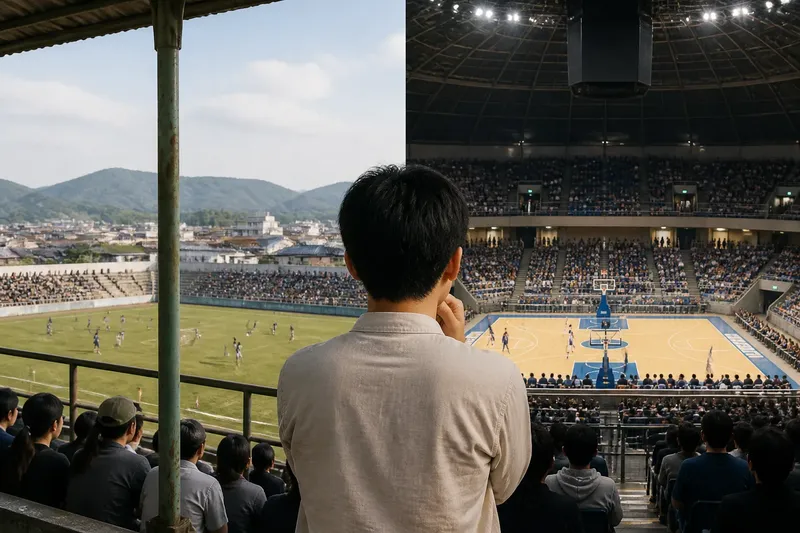
Open stands and enclosed arenas shape a match before the first play: one may leave the surrounding district in view, while the other folds the crowd around the contest. For spectators choosing between them, the useful question is not which venue is better, but what each setting lets you notice.
Open stands connect the match to its surroundings
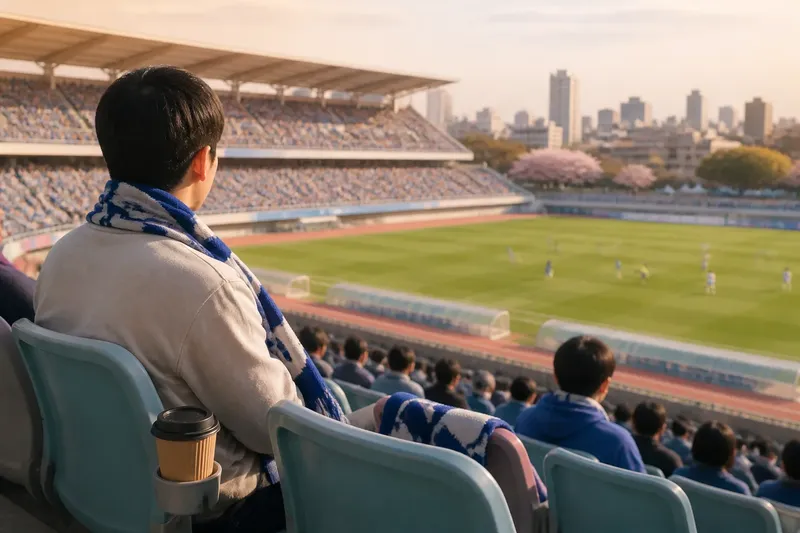
At an open-air ground, the scene may include a roof edge, a neighboring street, rooftops, or a line of hills beyond the boundary. In many eastern sporting districts, that setting makes a local ground feel like part of its neighborhood rather than a room apart from it.
The extra context can also compete with the action. A fence or roof post may cross the view, and people standing in front can hide the lower part of the playing area. A high seat often clarifies spacing; a low one can make movement feel immediate but leave more of the field behind other spectators.
Open air gives chants and calls room to disperse. A nearby section may sound vivid, while voices from the far side become harder to distinguish. Wind, stand orientation, and roof coverage all shape what reaches a seat, so the open label alone tells little about the sound.
Light and weather can change the viewing experience, too. Check whether the stand faces strong sun, whether its roof covers the seating area, and whether a support interrupts the line to the playing surface. Treat these as separate checks: shelter does not establish a clear view, and a clear view does not provide shelter.
Enclosed arenas shape attention around the action
A covered arena can make the playing space feel like the center of a contained scene. Walls and roof limit the view of the surrounding district, while lighting and rising seating draw attention toward a court, ring, or floor.
That concentration is not the same as a perfect sightline. Rails, camera platforms, overhangs, and the heads of spectators ahead can obstruct particular seats. A high position may reveal the contest’s patterns but make small gestures harder to read.
Sound has its own architecture. Hard walls and ceilings can send applause and calls back toward the crowd; softer surfaces, curtains, or padded panels may absorb some reflections. The result can feel close, diffuse, or echoing depending on the room and the crowd’s arrangement.
Think of the roof as a lid on a mixing bowl: it changes where the sound travels, but it does not make every voice equally clear. A venue photo can hint at the room’s shape and surfaces, though it cannot predict the sound of a particular event.
Choose the view that matches what you follow
Proximity is not just how many rows separate a seat from the action. You might want to read a player’s movement, follow quick exchanges, see the shape of a formation, or feel the crowd’s reaction around you. Those preferences can point to different seats in the same venue.
Imagine a spectator deciding between a low seat beside an open field and a high seat in a covered arena. The spectator’s starting priority is to track how players move across the whole field, not to see expressions. They check a view image for the open seat and notice that a rail crosses the near boundary; they then check the arena view and see the full playing area without an apparent obstruction. The high arena seat better serves that priority, although it offers less of the close-up feeling the low seat might provide.
Reverse the starting priority—say the spectator mainly wants to feel nearby reactions—and the open seat could become the more appealing choice if its rail does not block the action. The decision follows from the specific view and the way the person watches, not from the venue type by itself.
What should you check before choosing a seat?
How can I judge a seat view from a map?
Use the map to locate the section and row, then look for a photo taken from a similar angle. If no matching image exists, check venue photos for rails, posts, platforms, or overhangs that could cross the view.
Will an open stand make crowd noise feel distant?
It can, especially for voices across a broad ground, but nearby chants may still feel distinct. Stand orientation, wind, roof coverage, and crowd placement affect how sound carries.
Does a covered arena always feel close?
A roof and walls can keep attention and sound within the room, but a high seat may still feel removed from the action. Compare the seat’s angle and distance with the kind of detail you want to see.
Which seat helps me follow the whole contest?
An elevated view can make spacing and movement easier to read, whether the venue is open or enclosed. Check that the angle gives you a clear view of the full playing area and that no structure interrupts it.
Compare the details that change your experience
- Check the sightline for a rail, post, or platform; if it crosses the playing area, choose a view image from another section before deciding.
- Check whether the seat faces direct sun; if glare would interfere with watching, choose a shaded section or plan for a different time if that option exists.
- Check the roof’s coverage over the seat; if it leaves the row exposed and shelter matters to you, choose a covered section instead.
- Check whether the view includes the full field or court; if the near boundary or far end disappears, choose a higher or more central angle.
- Check the distance to the action; if you want to read close movement and the view looks remote, choose a lower section if its sightline remains clear.
- Check the arena’s visible hard surfaces and ceiling shape; if the room looks highly reflective and distinct calls matter to you, choose a seat nearer the sound source or consider an open section.
- Check the route from the entrance to the section and any local seating rules; if access or restrictions do not suit your needs, ask the venue about an appropriate alternative.
These checks make open stands and enclosed arenas easier to compare without treating either as a promise of comfort or clarity. For a useful crowd view, match the seat’s actual angle, shelter, and sound setting to the parts of the contest you most want to follow.
Before settling on a section, decide what you will watch during a quiet passage: the whole pattern, one exchange, or the crowd’s response. That small choice gives your search for an open stand or enclosed arena a clear purpose—and helps you recognize a seat that fits once you see it.